
Zagreb, December 19th, 2023 – The level of job satisfaction and work-life balance among employees working from home are higher than among those working from the office, according to a recent scientific study conducted by Mplus Group in collaboration with leading scientists and research institutions. The study, presented by the Croatian Employers’ Association (HUP), showed that 78 percent of employees wished to continue working from home.
As part of its annual employee engagement study, Mplus Group included additional questions about remote work and well-being to look into the link between job satisfaction and work from home.
After collecting 4,554 questionnaires from 7 countries, the analysis was carried out in collaboration with researchers from renowned universities, including Harvard, Oxford, and the University of Zagreb, linking job satisfaction and remote work. The study was accepted and published in the prestigious journal Frontiers of Psychology.

“Before the pandemic, 27 percent of Mplus employees worked from home, 4.7 percent in a hybrid model, and 70.7 percent from the office. In March 2020, with the pandemic outbreak, 70 percent of employees transitioned to remote work, marking a 61 percent increase. Women were more represented in the sample, accounting for 70.29 percent of respondents. During the COVID-19 pandemic, we observed that remote work was a successful business policy for Mplus, so we retained it after the pandemic ended. However, we wanted to verify whether our employees shared the same perspective scientifically. We express our gratitude to all participants in the research.” — Bruna Kostelac Košir, Chief People Officer at Mplus Group
The research proves that business can join hands with science and demonstrates Mplus’s firm commitment to sharing knowledge with the broader community and focusing on employee well-being. The most commonly cited advantages of working from home among Mplus employees included time savings on commuting, more free time, and a more balanced daily life, allowing for increased family time.
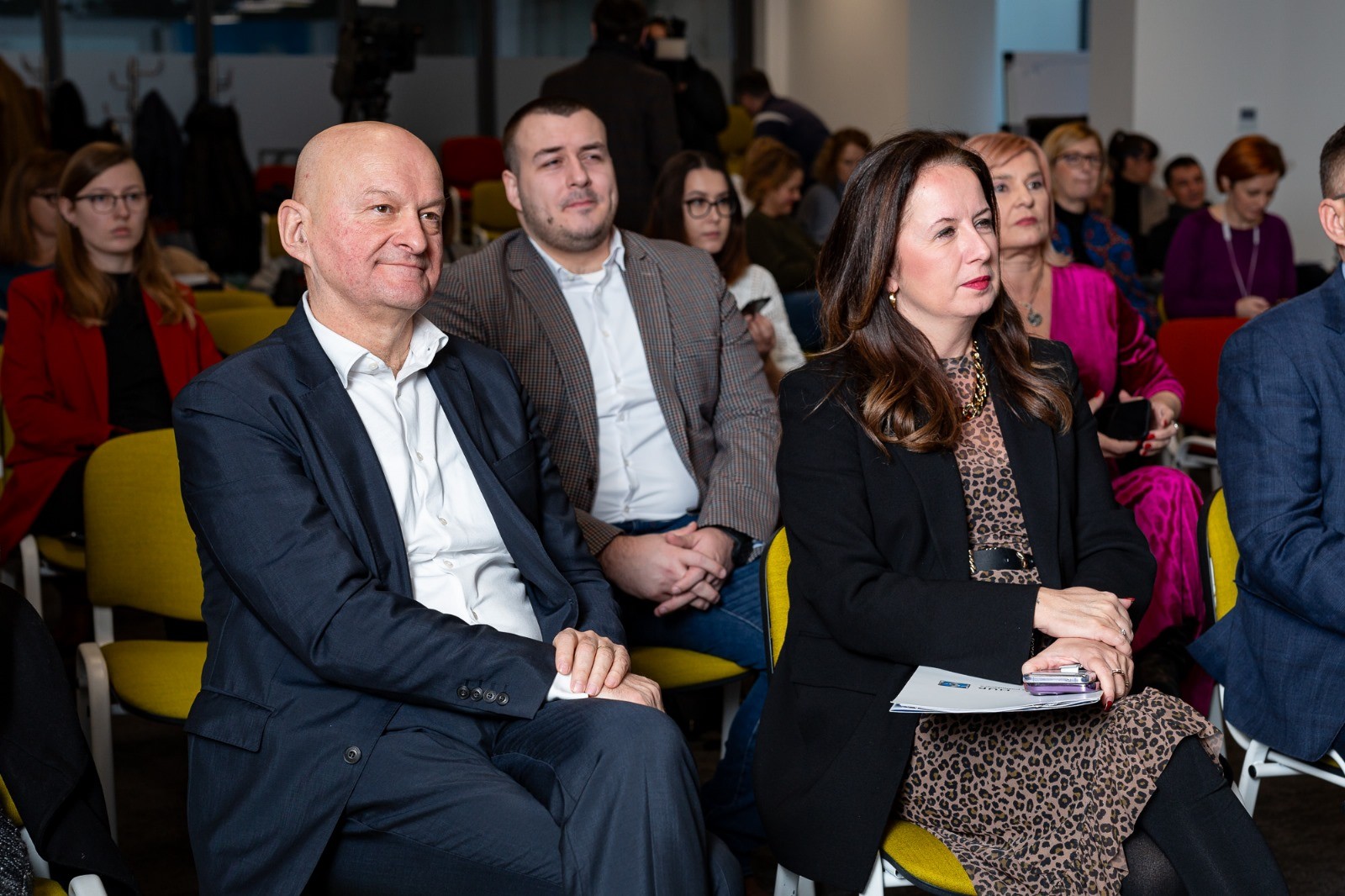
Following the presentation of the study’s findings, a round table discussion titled “The Connection between Remote Work and Job Satisfaction, the Balance between Work and Private Life, and Work Model Preferences” was held. Panelists included representatives from Heineken, NTL, the Croatian Employers’ Association, the Croatian Ministry of Labor, IEDC-Bled School of Management, and the agency Komunikacijski laboratorij.
Irena Weber, Director General at the Croatian Employers' Association, emphasized that the recent robust growth in employee income and standards will persist next year. With intense competition for each employee in the Croatian labor market, she noted that retaining and attracting workers is now a key goal for most employers. A stable, well-paid job that offers development opportunities and adaptability to new trends is crucial in the 21st-century job landscape, Weber noted.
Dražen Opalić, Director of the Labor and Safety at the Croatian Ministry of Labor, highlighted the recent amendments to the country's Labor Law, which affected remote work regulations, ensuring the legal security for employment relationships outside the employer's premises and offering flexibility and benefits for both workers and employers.
Martin Evačić, President of the Croatian Employers' Association - Trade Sector and CEO of NTL, shared insights on NTL's response to the pandemic. With over 80 percent female employees, the company extensively explored remote work during the first lockdown in 2020, successfully organizing tasks remotely, excluding direct contact in retail and warehouse work.
Danijela Govorčinović Šimunović, Director of Human Resources at Heineken, highlighted the company's commitment to a healthy work environment, recently recognized with the Excellence in Challenges award. During the pandemic, 25 percent of employees wanted to return to offices, but today, 30 percent have the option to work from home. Approximately 22 percent now work remotely for ten days a month.
Manuela Šola, owner and director of the agency Komunikacijski laboratorij, noted that she anticipates significant changes in the labor market. While emphasizing the importance of a human-centric focus, she pointed out that she's looking forward to the development of artificial intelligence (AI), encouraging the utilization of technology for higher work quality.
You can find out more about the event and the study’s findings in this article by tportal.hr, in Croatian.